

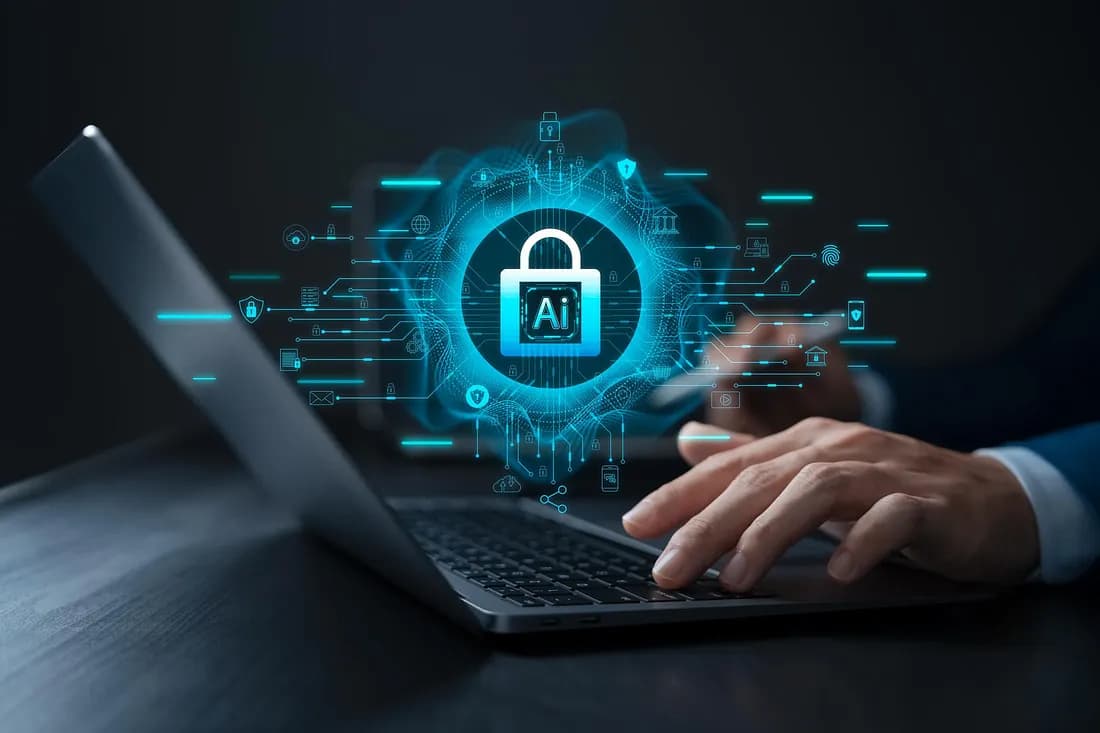













The AI Race Is Moving Faster Than Security Conversations
Businesses are under pressure to innovate.
Nobody wants to fall behind competitors who are already introducing AI-powered features, automating workflows or creating more personalized customer experiences.
That pressure is understandable.
AI can genuinely save time, reduce repetitive work and create opportunities that were difficult to imagine just a few years ago. However, the excitement around launching new features can sometimes push important security discussions further down the priority list.
Teams may spend weeks discussing what an AI assistant should do, how fast it should respond and how accurate its answers should be.
But how much time is spent discussing what information it should be allowed to access?
Or what happens if someone tries to manipulate the assistant into revealing information it should not share?
These questions are not as exciting as launching a new feature, but they are equally important.
The goal should not be to build AI applications as quickly as possible. It should be to build AI applications that are useful, reliable and secure.
A Smart AI Feature Can Still Create a Serious Business Risk
Let us take a simple example.
Imagine a company develops an AI-powered customer support chatbot.
The chatbot connects with the company’s internal knowledge base and helps customers find information about products, orders and services. Everything works perfectly during the initial demonstration. Customers receive quick responses. The support team saves time. Management is happy. Now imagine the chatbot also has access to private customer records.
What happens if a customer asks it to display another person’s order details?
What happens if someone deliberately enters instructions designed to make the AI ignore its original rules?
What if the assistant retrieves information from an internal document that the customer should never have been able to access?
Suddenly, a useful feature becomes a potential security problem.
This is why AI applications need more than a good model and a well-designed interface. They need proper permissions, controlled access to information, secure integrations and testing that considers how people might misuse the system.
The Numbers Show Why This Matters
AI security is no longer just a theoretical concern.
According to IBM’s 2025 Cost of a Data Breach Report, 63% of the organizations studied that experienced data breaches either lacked AI governance policies or were still developing them.
The report also found that organizations with high levels of unauthorized or unmanaged AI usage faced an average of $670,000 in additional breach costs compared with organizations with little or no such usage.
Think about that for a moment.
A company might introduce an AI tool to save a few hours of manual work every week, but poor security practices could expose it to significantly greater financial and operational risks. And the financial impact is only one part of the problem. There is also customer trust, business reputation, regulatory responsibility and the time required to recover from a security incident. For smaller businesses and growing startups, these consequences can be especially difficult to manage.

Where Businesses Commonly Overlook AI Security
There are a few areas I believe deserve more attention during AI application development.
Giving AI Access to More Data Than It Actually Needs AI applications often work better when they have relevant information. But that does not mean they need access to everything.
For example, an AI assistant helping customers track deliveries should only retrieve delivery information belonging to the authorized customer. It should not have unrestricted access to every order, payment record or internal company document.
The principle is simple: Give the AI access to what it needs to complete the task, not everything the business has.
This is where proper user permissions and role-based access controls become important.
2. Trusting AI Responses Without Proper Validation
AI can generate answers that sound extremely confident, even when the information is incorrect. In a general conversation, an inaccurate response might simply be inconvenient. But consider an AI application that helps employees review financial reports, process insurance information or recommend operational decisions.
An incorrect answer could create real business consequences.
That is why sensitive workflows need reliable data sources, validation rules and human review when the decision carries significant risk. AI should help people make better decisions, not automatically become the final authority for every decision.
3. Connecting Too Many Third-Party Tools Without Reviewing Security Modern applications rarely operate independently.
An AI-powered business platform might connect to payment gateways, CRMs, cloud storage, email providers, analytics tools and external AI models. These integrations can make an application incredibly powerful. They also create additional security responsibilities. Every integration introduces questions about how information is transferred, where credentials are stored, who can access the connection and what happens if a third-party service is compromised. Even a secure application can become vulnerable through a poorly configured integration.
4. Treating Security as a Final Testing Activity This is one area where project planning makes a significant difference. Security should not appear on the project checklist only when development is almost complete. It should be discussed during requirement gathering, architecture planning, development, testing and deployment. Otherwise, teams may discover late in the project that certain features need major changes to meet basic security expectations. And fixing those problems after launch can be considerably more disruptive than addressing them during development.
So, What Should Businesses Actually Do
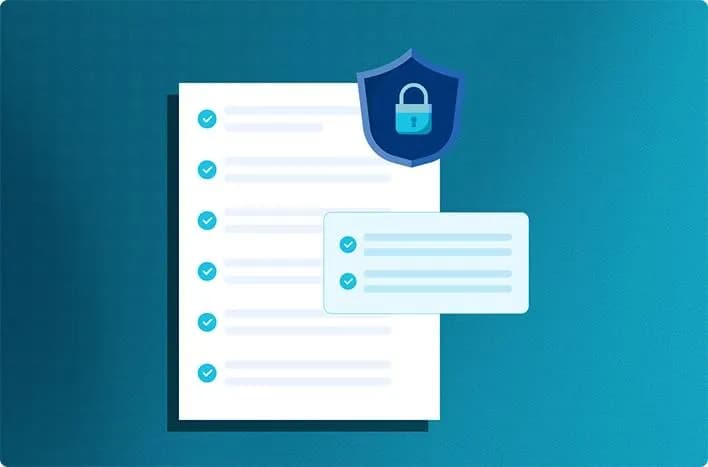
The good news is that businesses do not need to stop experimenting with AI. They simply need to approach it more responsibly. Here are some practical steps worth considering before launching an AI-powered product:
Start with the information your AI will handle: Understand what data the application needs, where that data comes from and whether it includes confidential business or customer information. Define who can access what: An AI assistant should follow the same access restrictions as the application around it. Permissions must be enforced by the system, not left entirely to the AI model. Secure APIs and third-party integrations: Use appropriate authentication, protect API keys and regularly review connected services. Test beyond the happy path: Do not only check whether the AI gives the right answer. Test how it behaves when users provide misleading instructions, request restricted information or submit unexpected inputs. Keep people involved in important decisions: When AI can approve payments, change records or trigger sensitive business actions, appropriate verification and human approval mechanisms should be considered. Continue monitoring after launch: Applications change. New features are introduced. Dependencies are updated. Security risks evolve. Security is not something a business finishes once and never revisits.
In fact, the OWASP Top 10 for LLM Applications identifies risks such as prompt injection, sensitive information disclosure and excessive AI autonomy. These are useful reminders that AI applications require security considerations beyond traditional software testing.
Security Is Not Just the Developer’s Responsibility
This is something I feel strongly about from a project management perspective. When security comes up, people often assume it is entirely the responsibility of the developers or cybersecurity team.
Of course, technical teams play a major role.
But secure software also depends on the decisions made before development begins. Business owners need to communicate how sensitive their data is.
Project managers need to ensure security requirements are included in the scope. Designers need to consider how users interact with sensitive information. Developers need to implement appropriate safeguards. And QA teams need to test whether those safeguards actually work.
When everyone understands their responsibility, security becomes part of the product rather than an additional feature.
I believe this mindset is particularly important for startups and growing businesses.
When budgets and timelines are limited, it can be tempting to focus entirely on getting the first version live.
But even an MVP should have a reasonable security foundation based on the risks involved.
You can always add more features later.
Rebuilding lost customer trust is much harder.
Building AI Products That Businesses Can Actually Trust
At Vasudev Innovative Software (VIS), our work involves building web applications, mobile applications, SaaS platforms and AI-powered business solutions.
One thing I believe matters in these projects is looking beyond whether a feature works during a demonstration.
The bigger picture includes how the application will handle real users, business data, integrations, permissions and future growth.
For businesses exploring AI adoption, having the right development approach from the beginning can make a meaningful difference.
Whether the goal is an intelligent chatbot, an AI-enabled SaaS product or workflow automation, the discussion should include both functionality and security.
If you are exploring a similar project, you can learn more about our work at https://vinnisoft.com/
Final Thoughts: Smart Software Should Also Be Safe Software
I am genuinely excited about what AI is making possible for businesses.
We are seeing applications become more useful, more connected and more capable of handling work that previously required significant manual effort. But I also believe the next stage of AI adoption should focus on something beyond adding new capabilities. It should focus on building confidence.
Confidence that customer information is protected.
Confidence that the application behaves responsibly.
Confidence that businesses can continue growing without constantly worrying about avoidable security risks.
Because at the end of the day, people do not just want software that is intelligent.
They want software they can trust.
And perhaps that is the question more businesses should be asking before launching their next AI-powered application.
What do you think? Are businesses giving AI security enough attention, or is innovation moving faster than responsibility?