














You have a software idea, a budget and a plan to bring it to life. Now comes an important decision: Who should build it?
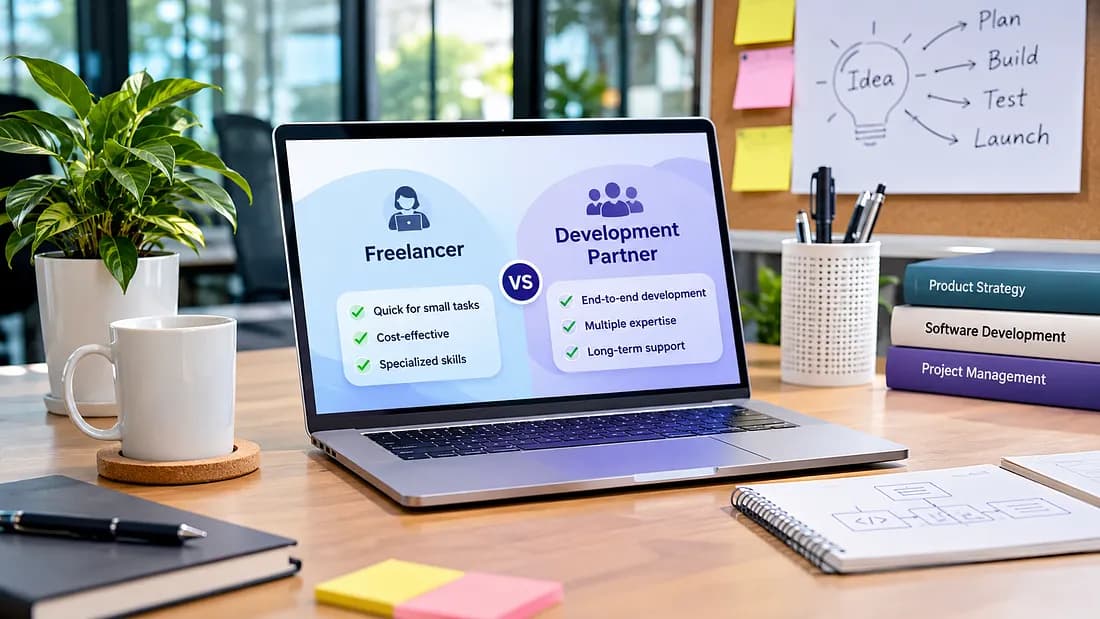
Should you hire a freelancer or work with a software development partner?
Both options can help you build a successful product. The difference becomes clearer when your project starts growing, requirements change and new technical challenges appear. A website might only need one developer. But building a SaaS platform, booking system or business application can involve multiple technologies, integrations, security requirements and ongoing maintenance.
That is why choosing the right development approach matters just as much as choosing the right technology.
When Hiring a Freelancer Makes Sense
Freelancers are a practical choice for projects with clear requirements and a limited scope. If you need a landing page, website improvements, bug fixes or a specific feature, an experienced freelance developer can often get the job done efficiently. Hiring a freelancer can also be cost-effective when your business already has a technical team to manage the overall project.
However, things can become challenging when a simple project starts expanding.
Imagine hiring a developer to build an online booking platform. Initially, the requirement is straightforward: customers should be able to select a service and book an appointment. As the business grows, you decide to introduce online payments, automated notifications, customer accounts, reporting and third-party integrations. Suddenly, the project needs more than one type of technical expertise. You may need additional developers, testers and someone to coordinate everything.
This is where a software development partner can make a difference.
What Does a Software Development Partner Do Differently?
A software development partner brings together the technical expertise needed to plan, build, test, deploy, and maintain a software product. Instead of managing several independent specialists, a business can work with a coordinated team that understands how different parts of the application connect and depend on each other.
For example, adding a payment feature is not simply about connecting a payment gateway and displaying a success message. The system also needs to handle failed transactions, prevent duplicate payments, update records correctly, manage retries, and protect customer information.
These details can easily be overlooked when the focus is only on completing individual features. A development partner looks at the product as a complete system. This means thinking about how new features will affect existing functionality, identifying potential problems early, and making technical decisions that support the product as it grows.
The goal is not to make the software more complicated than necessary. It is to build it in a way that works well today while leaving enough flexibility to handle the changes that may come tomorrow.

Why Software Development Is More Than Writing Code
A feature can work perfectly during development and still create problems when real customers start using it. What happens when two users try to book the same appointment? What if a payment succeeds but the application does not receive confirmation? What happens when traffic suddenly increases? These situations require more than functional code. They require thoughtful planning, reliable architecture, testing and proper error handling.
Communication is equally important.
As projects grow, new requirements appear, priorities shift and technical decisions need to be explained clearly. Without documentation and coordination, even small changes can become time-consuming. A structured development process helps teams manage these challenges while keeping the product aligned with business goals.
Freelancer vs. Software Development Partner: What About Cost?
Cost is often the first thing businesses compare. A freelancer may offer a lower starting price, especially for smaller projects. A software development company may require a larger investment because multiple specialists and services are involved.
But the initial development cost is only part of the picture. Poorly structured code, missing documentation, unresolved security issues and unreliable integrations can make future improvements more expensive.
For example, saving money during initial development may not help if a growing application later requires major changes to support new features. This does not mean choosing the more expensive option is always better.
It means businesses should consider the total cost of building, maintaining and improving their software, rather than focusing only on the first quotation.

How Do You Choose the Right Option?
The decision becomes easier when you look at what your project actually needs.
1. Choose a freelancer when you have a small or clearly defined project, need specialized support or already have a team managing development.
2. Consider a software development partner when your product involves multiple technologies, complex integrations, ongoing development or requires expertise across design, engineering, testing and deployment. An in-house team is another option for businesses that need continuous technical development and have the resources to manage it internally.
Before making a decision, ask yourself a few practical questions. Who will manage the project? Who will test the application? What happens when requirements change? Who will maintain the product after launch? The answers will help you understand which development model fits your business.
The Right Partner for Your Software Journey
Choosing between a freelancer and a software development agency depends on your project’s requirements, complexity and long-term goals. While freelancers are a good choice for smaller, well-defined tasks, a software development agency often provides greater value when businesses need a complete solution that can grow over time.
Working with an experienced agency gives businesses access to a team of developers, designers, testers and technical specialists who can manage different aspects of the project together. This means better coordination, consistent development practices and ongoing technical support without the challenge of managing multiple independent resources.
For businesses planning to build scalable applications, SaaS platforms or long-term digital products, having a reliable technology partner can make the development process more manageable and efficient.
At Vasudev Innovative Software (VIS), we help startups and businesses turn their ideas into reliable web applications, mobile apps and custom software solutions. From understanding initial requirements to development, testing and ongoing improvements, our team focuses on building software that supports real business needs.
Planning your next software project? Explore our services and projects at www.vinnisoft.com and connect with our team to discuss how we can help bring your idea to life.