














AI and Vibe Coding in Modern MVP Development
AI can help you turn an idea into a working MVP faster than ever. But the real challenge begins when real users start using it.
A few years ago, building an MVP could take months. You needed developers, designers, backend infrastructure, databases, testing, and deployment before you could put the first version in front of users. Today, AI coding tools such as Claude Code, Cursor, and GitHub Copilot have changed that process.
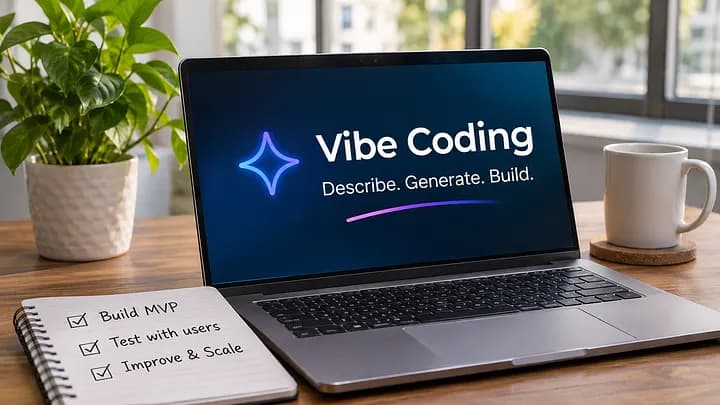
This is where vibe coding has become so interesting. You can describe an idea in plain language, let AI generate code, test the result, make changes, and move forward much faster. For startups, that can make product experimentation significantly easier.
But there is one question that often gets overlooked: what happens when real users arrive?
Building an MVP that works is one thing. Building software that can handle real users, real data, security risks, unexpected behaviour, and growing traffic is something else entirely.
Vibe Coding Has Changed How MVPs Are Built
The biggest advantage of vibe coding is speed. A founder or developer can now experiment with an idea and create a working prototype much faster than before. AI can help with interfaces, APIs, database structures, authentication, integrations, testing, and many other parts of an application.
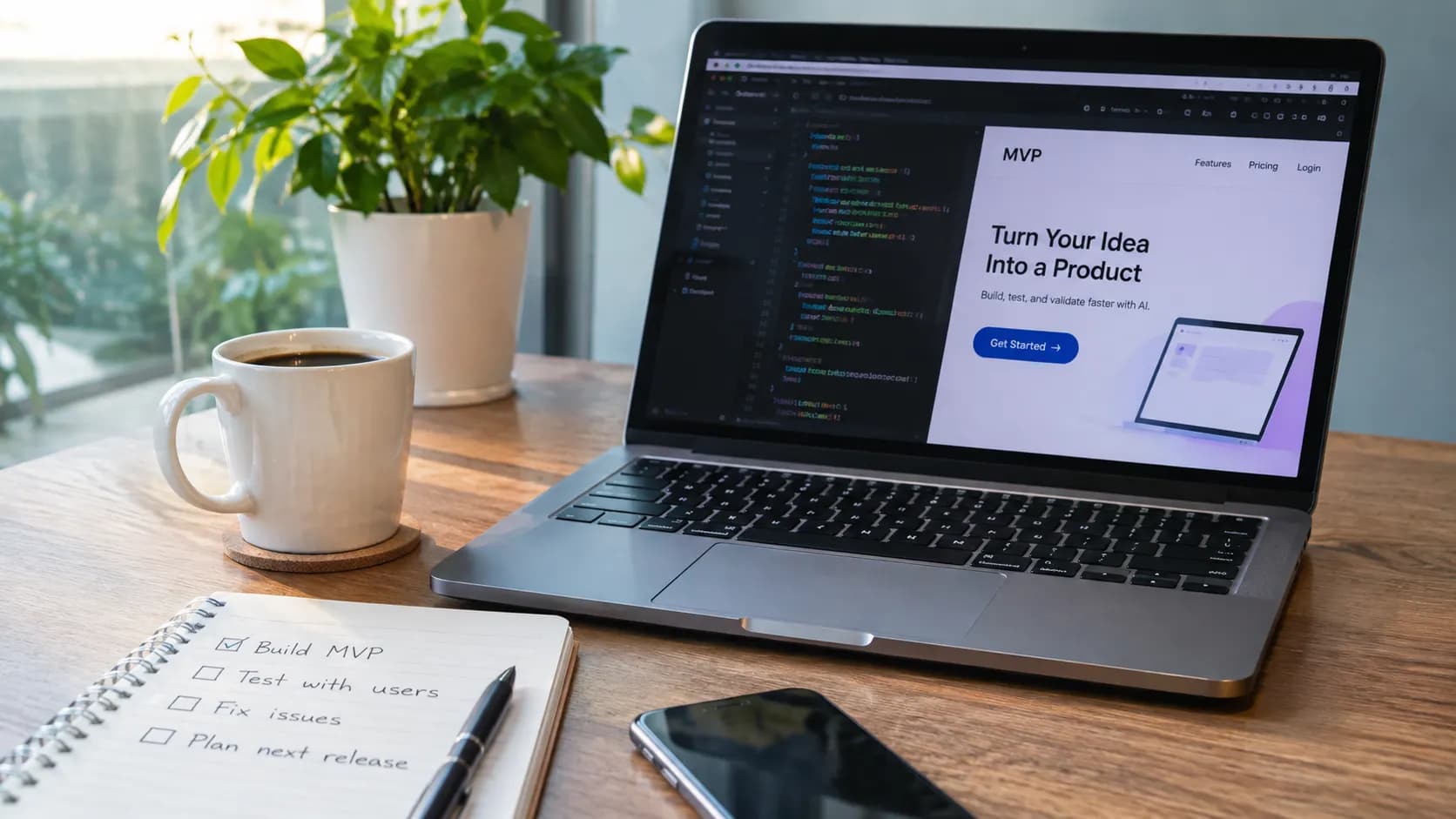
That makes it easier to validate an idea before investing heavily in it. Instead of spending months building a product and only then discovering that customers do not want it, teams can build a smaller version, put it in front of users, and learn from real feedback. That is where vibe coding works extremely well. An MVP does not need to be perfect. Its purpose is to validate an idea. The problem starts when that MVP becomes the actual product.
What Changes When Real Users Arrive?
Imagine you have built a SaaS application using AI coding tools. It works perfectly with ten users. Then you reach 100 users, followed by 1,000.
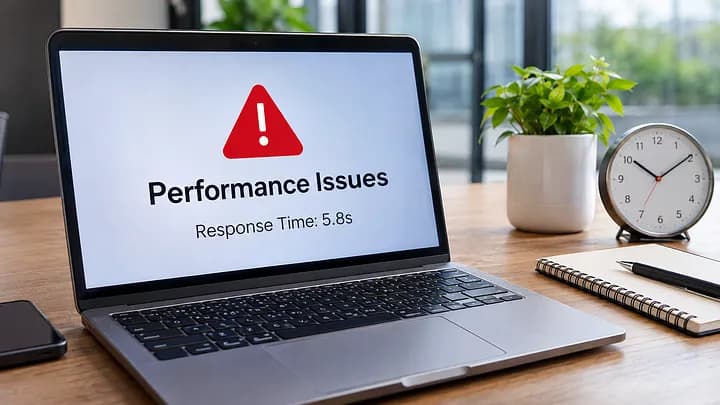
Suddenly, problems that never appeared during development start showing up. Database queries become slower, API requests time out, payments occasionally fail, and users discover edge cases you never considered. Hosting costs can also increase as traffic grows.
This does not automatically mean the AI-generated code is bad. It means that production software has requirements that a small prototype does not. There is a major difference between saying, “The application works,” and saying, “The application is ready for production.”
AI Can Write Code, But It Cannot Own the Architecture
One of the biggest misunderstandings around AI coding is that generating code is the same as engineering software. It is not.
AI can create functions, APIs, database queries, and complete features. But someone still needs to decide how the system should be structured, where business logic belongs, how services communicate, and what happens when something fails.
Take payments as an example. AI can help create a payment integration quickly, but production introduces questions that go much deeper. What happens if a payment webhook arrives twice? What if the payment succeeds but your application does not receive the response? What if a user clicks the payment button twice?
These are architecture and engineering decisions. They become even more important when real customers, personal data, and real money are involved.
The Hidden Cost of Moving Too Fast
Vibe coding makes it easy to keep moving. A feature breaks, AI fixes it. A new requirement appears, AI adds it. Another edge case appears, another fix is generated. At first, this feels incredibly productive. But over time, it can create technical debt. The codebase may slowly become a collection of quick fixes rather than a system designed to evolve.
Technical debt is not always bad. Startups often need to move quickly while validating an idea. The problem is allowing temporary solutions to become permanent architecture. A prototype can survive with shortcuts. A growing product usually cannot.
AI-Generated Code Still Needs Security and Testing
A prototype might have five test users. A production application could eventually have thousands or millions. That changes the security risk significantly.
AI-generated code should not automatically be considered secure simply because it was created by an advanced AI model. Authentication, authorization, input validation, API permissions, database access, secrets, third-party integrations, and sensitive data still need proper protection.
The same applies to testing. Real users do things developers do not always expect. They submit invalid data, repeat actions, lose network connections, use different devices, and encounter unexpected conditions. Production-ready software needs to be prepared for those situations.
Can AI-Generated Software Scale?
An application that works perfectly with 20 users tells you very little about how it will behave with 20,000. As traffic grows, database queries can become expensive, APIs can receive too many requests, background jobs can pile up, and inefficient code can affect performance.
That does not mean an MVP should be over-engineered for millions of users from day one. Good scalability is about making sensible decisions today while understanding where the system may struggle tomorrow. The goal is not to build everything for massive scale immediately. The goal is to avoid creating software that becomes extremely difficult to improve when the business grows.
Vibe Coding Is Not the Problem
Vibe coding is not bad. In fact, it is one of the most useful changes happening in software development.
AI coding tools can help developers prototype faster, generate repetitive code, explore ideas, write tests, debug problems, and work with unfamiliar technologies. They can reduce repetitive work and give developers more time to focus on higher-level decisions.
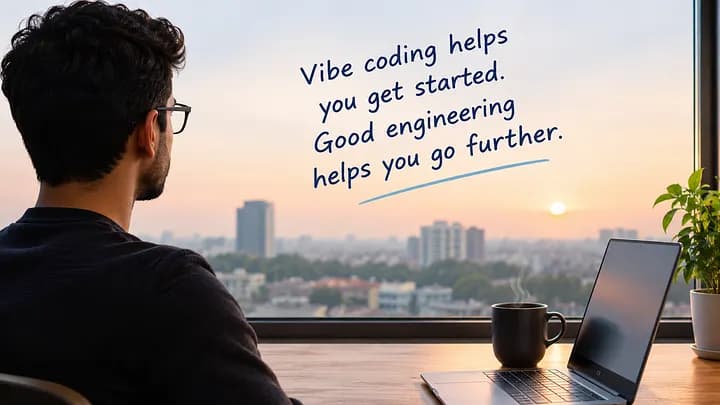
The problem is assuming that AI-generated code automatically means production-ready software. The better approach is not humans versus AI. It is humans working with AI. AI can accelerate implementation while developers remain responsible for architecture, security, testing, performance, and long-term maintainability.
What Should Founders Do?
If you are building an MVP, there is no reason to avoid AI coding tools. Use them to experiment, validate your idea, and get your product in front of users faster.
But pay attention when the product moves beyond the prototype stage. Once customers depend on your application, architecture, security, scalability, testing, monitoring, and maintainability become much more important.
You do not necessarily need to throw away everything you built with AI. Often, the better approach is to identify weak areas, improve the architecture, strengthen security, add proper testing, and gradually replace temporary solutions.
The Real Test Starts With Your First Customer
Vibe coding has made software development much more accessible. A founder can have an idea in the morning and potentially have a working prototype by the evening. But the real test does not happen when the prototype works on your laptop. It happens when the first real customer signs up.
The question changes from “Can we build this?” to “Can we build this properly?” And eventually, it becomes:
Can we secure, operate, scale, and maintain this when thousands of people depend on it?
That is where the difference between an AI-generated MVP and production-ready software becomes clear. AI can help you get there faster. But when real users arrive, good software still requires good engineering.
Building Beyond the MVP
At Vasudev Innovative Software (VIS), we help startups and businesses turn their ideas into reliable web applications, mobile apps, and custom software solutions. From understanding initial requirements to development, testing, deployment, and ongoing improvements, our team focuses on building software that supports real business needs.
Planning your next software project? Visit VIS to explore our services and projects or connect with our team to discuss how we can help turn your idea into a reliable, scalable product.